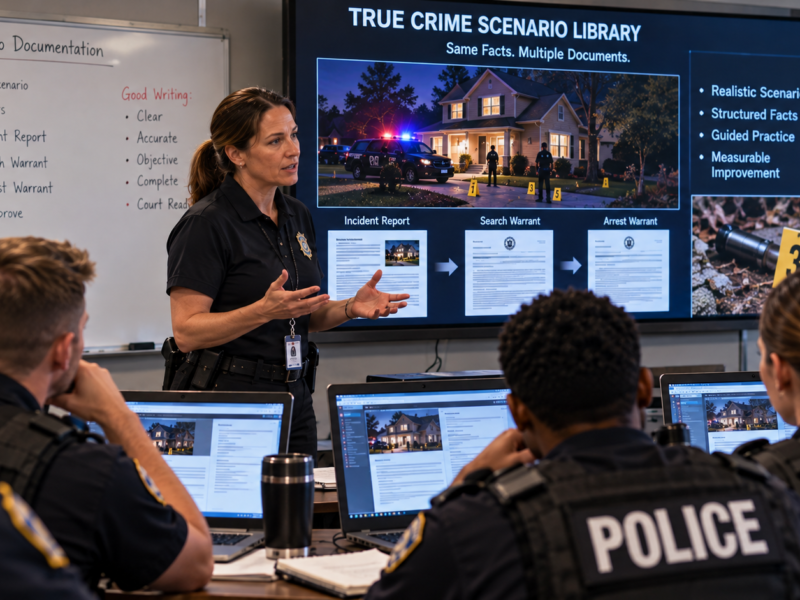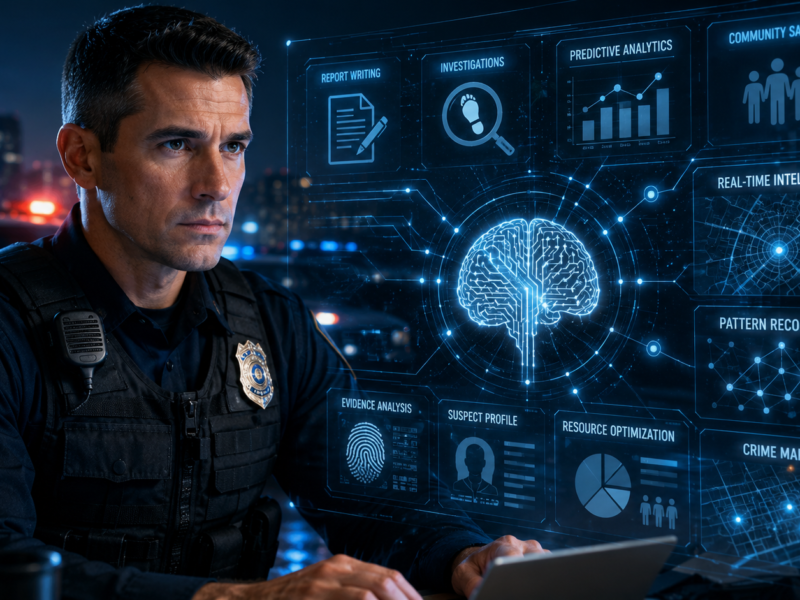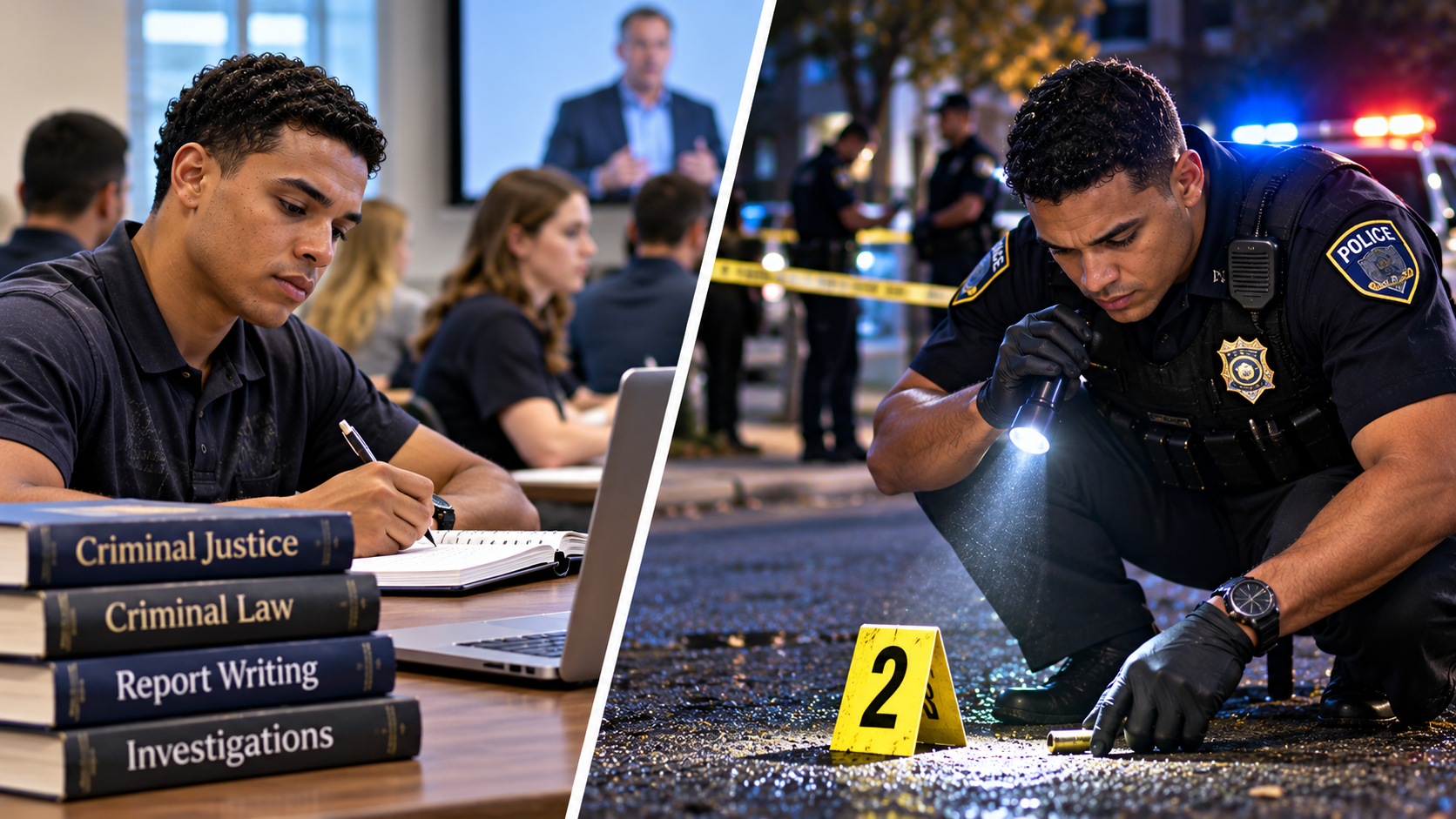
Police training teaches law, policy, tactics, communication, report writing, and procedure. But the street tests something harder: whether an officer can apply that knowledge when the facts are incomplete, the situation is changing, and no answer is obvious.
That gap between knowing and doing is where judgment matters.
A classroom can explain reasonable suspicion, probable cause, investigative interviewing, evidence preservation, or officer safety. A real call may present several of those problems at once. Witnesses may disagree. Important facts may be missing. Stress may affect attention and memory. The officer still has to determine what matters, what remains uncertain, and what action the available facts support.
Research reinforces the importance of practicing these cognitive skills. Espevik et al. (2026) studied 166 police officers and found that decision-making training involving frameworks, scenarios, and debriefing significantly improved situational awareness. The benefits were especially relevant when officers faced ambiguous situations.
Stress also complicates performance. Research involving realistic police encounters has found that physiological arousal can affect perception, memory, spatial processing, and decision-making. The relationship isn’t always simple: some arousal can support certain aspects of performance, while excessive stress can contribute to cognitive distortions and errors (Andersen et al., 2022; Baldwin et al., 2025).
That is why realistic practice matters.
Officers should repeatedly confront situations that require them to ask:
- What do I actually know?
- How do I know it?
- What evidence could disappear?
- What assumptions am I making?
- What legal standard applies?
- Can I explain why I acted?
Scenario-based training lets officers make those decisions when the consequences are educational rather than real. Research involving experienced officers has also suggested that exposure to varied scenarios can help develop more adaptable mental models for future decision-making (Shortland et al., 2016).
The objective is not to memorize the “correct” answer to every situation.
It is to become better at thinking when there is no script.
School establishes the foundation.
The street tests whether you can use it.
Think you know what you would do? Test your street knowledge with a KLYVOREK Institute scenario.
–Klyvorek & OpenAI
KLYVOREK is a scenario-based training platform that helps officers, investigators, criminal justice students, and other learners strengthen investigative judgment, decision-making, and documentation skills through realistic fictional cases and AI-assisted practice.
__________________________________________
References
Andersen, J. P., et al. (2022). A reasonable officer: Examining the relationships among stress, training, and performance in a highly realistic lethal force scenario.
Espevik, R., Rose-Saus, E., Johnsen, B. H., Sanden, S., & Olsen, O. K. (2026). Decision-making training for frontline police officers: Effects on situational awareness and team behavior. Scandinavian Journal of Psychology, 67(2), 596–604.
Shortland, N., et al. (2016). “Gun! Gun! Gun!”: An exploration of law enforcement officers’ decision-making and coping under stress during actual events.