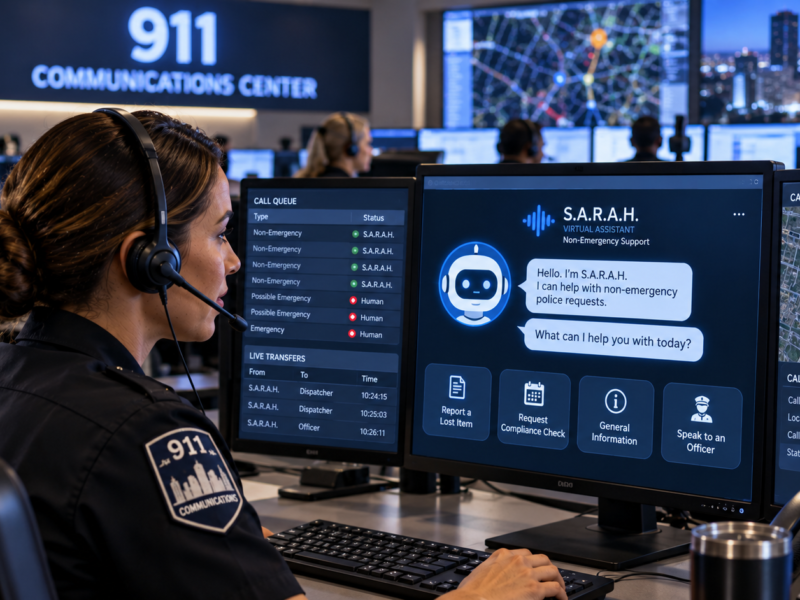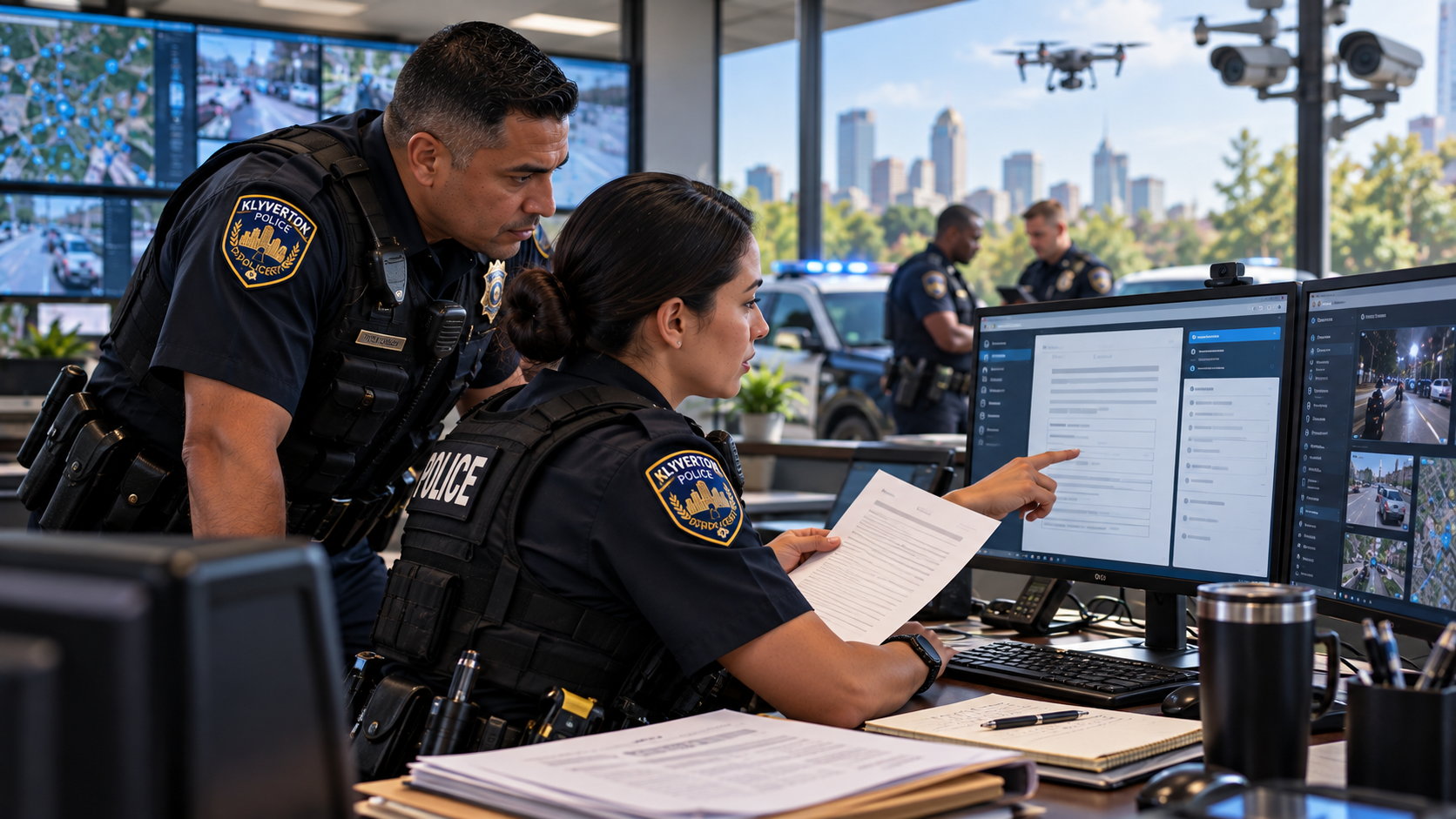
Law enforcement often describes artificial intelligence as a report-writing and video surveillance tool. That description may soon become too narrow.
AI-assisted documentation could become a broader operational platform that connects information across the entire life of a case, from the initial 911 call to the courtroom.
Consider what police documentation already touches: dispatch notes, body-camera footage, witness statements, incident reports, investigative supplements, evidence records, warrant applications, supervisory reviews, and prosecutorial decisions. These functions may exist in separate systems, but they describe the same event.
The next generation of police technology will not merely generate narratives. It will help organize and connect authorized information across these systems.
That transition has already begun. Axon’s Draft One uses body-camera audio to produce an initial report narrative that officers must review and approve. Motorola Solutions has introduced tools that can compare an officer’s account with information from 911 calls, radio transcripts, video, and other incident sources while highlighting discrepancies for human review (Axon, n.d.; Motorola Solutions, 2026). Klyvorek now offers an experimental feature to generate an initial report narrative for officers to use in a law enforcement documentation platform and plans to expand its functionality in the near future.
Motorola has also announced an AI-supported records and case management system that brings reports, evidence, and investigative workflows into a single environment. This suggests that the market may be moving from isolated AI features toward connected documentation platforms.

The opportunity extends beyond saving officers time. Properly designed systems could help departments:
- Identify missing information before report submission
- Compare statements with available evidence
- Maintain consistent names, dates, and event details
- Organize investigative documents
- Structure warrant drafts from officer-provided facts
- Preserve revisions and supervisory decisions
- Prepare clearer documentation for prosecutors
However, integration also increases risk. When more information passes through one platform, agencies must strengthen access controls, retention rules, audit trails, testing, and human verification. The National Institute of Standards and Technology recommends governing, mapping, measuring, and managing AI risks throughout a system’s use, not simply evaluating the final output (NIST, 2023).
AI should not become the officer, investigator, supervisor, or prosecutor. Its role should be to structure authorized information, identify gaps, support comparison, and improve documentation while keeping qualified people responsible for every consequential decision.
The departments that recognize this shift early will ask a better question. Instead of asking, “Can AI write our reports?” They will ask: “How can AI responsibly strengthen the entire documentation system from first response through prosecution?”
That is when AI-assisted documentation stops being a feature and becomes the next police technology platform.
–Klyvorek & OpenAI
KLYVOREK, a division of the American Academy of Advanced Thinking, LLC, is an AI-assisted law enforcement documentation platform that helps officers create clear, structured incident reports and draft search and arrest warrant applications, while keeping the officer in control of the final document.
_______________________________
References
Axon. (n.d.). A closer look at Draft One.
Motorola Solutions. (2026, January 28). New Motorola Solutions AI offerings help public safety agencies reclaim hours.
National Institute of Standards and Technology. (2023). Artificial Intelligence Risk Management Framework (AI RMF 1.0).