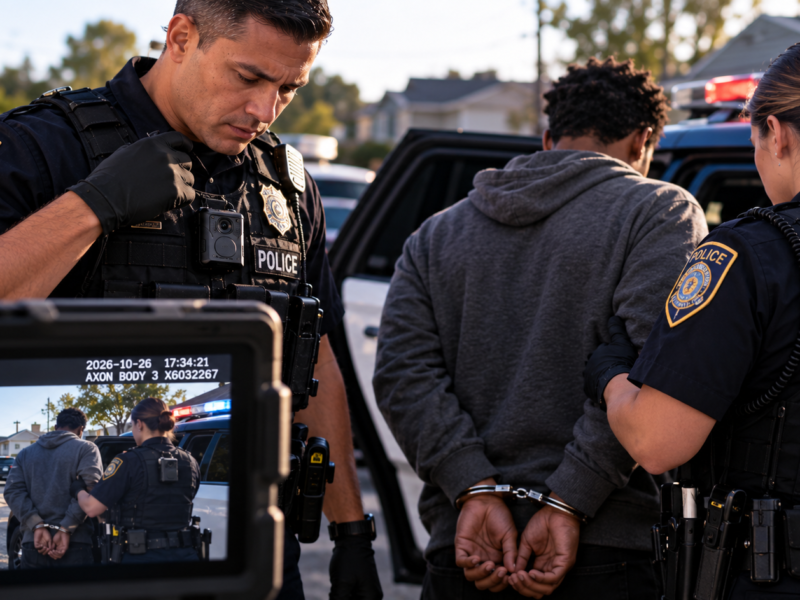
A 12-second video shows an officer grab a man’s wrist and pull him away from a car. The man’s hands appear empty. A bystander asks, “What did he do?”
It’s a fair question. The clip shows what the officer did. Can the officer explain why?
Imagine that, moments earlier, the officer heard a woman say, “He just threatened me,” and saw the man reach through the open driver’s window. Those facts change what a reviewer would want to know. The woman’s statement is an allegation. The reach is an observation. What the officer made of both is a judgment that still needs explanation.
What the camera shows, and what the report must explain
In many police actions, officers leave out key details when they put those decisions in writing, even though they can articulate their actions clearly.
Body-worn cameras give reviewers evidence they can compare with an officer’s account. But camera position and field of view can limit what a recording captures (Miller & Toliver, 2014). In this fictional encounter, another angle might show that the man was reaching for a phone. That detail matters, as does when the officer could first see it.
A report that says, “The subject made a threatening movement,” leaves the reader with the officer’s conclusion. A clearer account would describe where the man was standing, what the officer saw him reach toward, what the woman said, and when the officer intervened. It should also state what the officer learned afterward, in the order it happened. If the footage conflicts with the officer’s recollection, that difference deserves attention.
Turn the clip into a training exercise
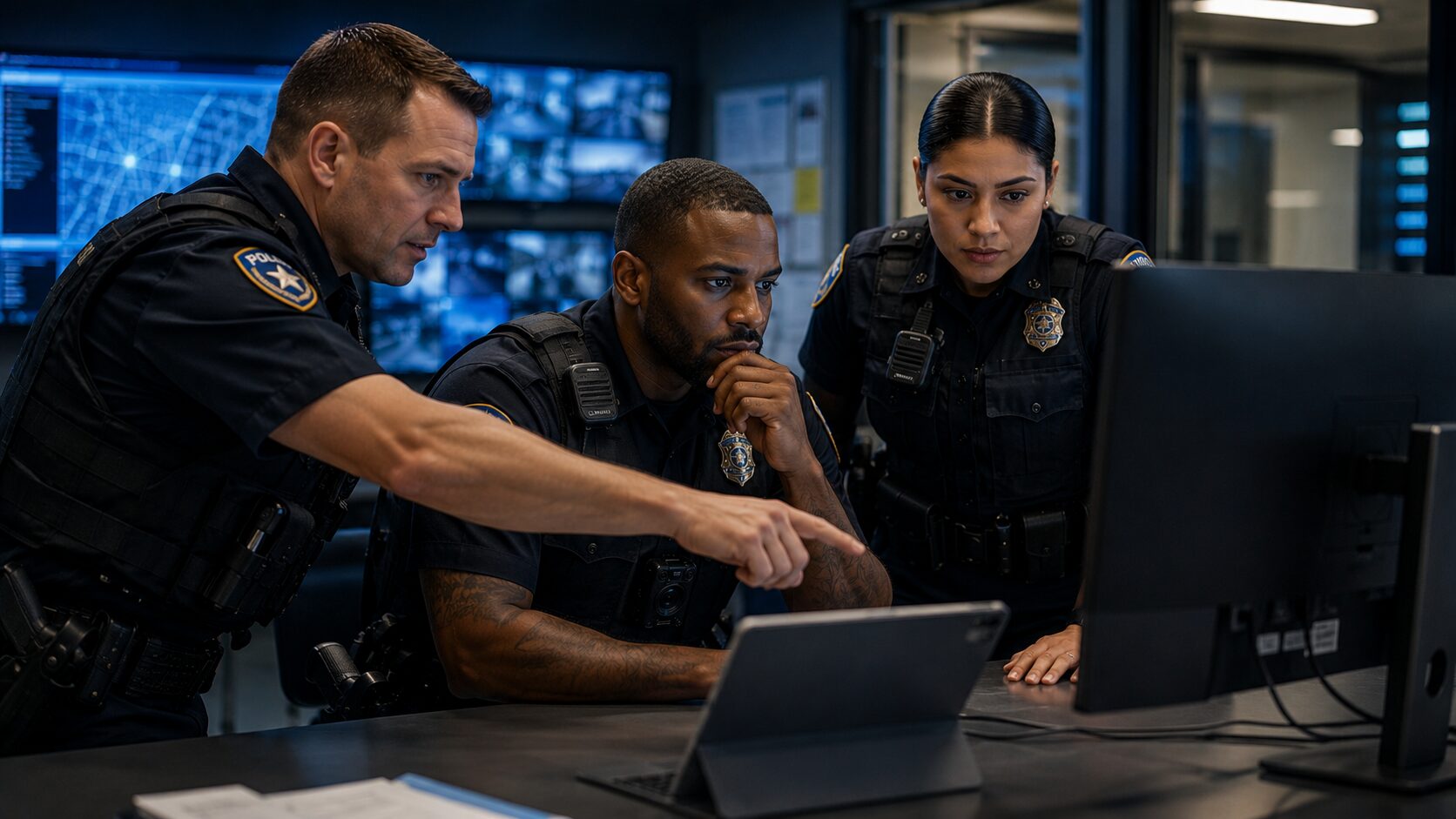
In a training scenario, show students or recruits the short clip first. Ask them to write down what they can verify. Then give them the witness’s statement and a second camera angle. Have them revise their account and explain which new facts changed their assessment.
Ask one final question: What would you still need to know before deciding whether the officer acted appropriately?
An officer can make a reasonable decision and still leave a reviewer with unanswered questions. An officer can also explain a decision clearly and give a reviewer good reason to question it. Clear documentation makes both outcomes possible by giving people something specific to evaluate.
In the end, investigative thinking that considers the “What If…?” allows officers to document their actions in a way that best reduces legal liability.
If you teach criminal justice, academy recruits, or officers in field training, explore a free practice case at KLYVOREK Institute.
–Klyvorek & OpenAI
KLYVOREK is a scenario-based training platform that helps officers, investigators, criminal justice students, and other learners strengthen investigative judgment, decision-making, and documentation skills through realistic fictional cases and AI-assisted practice.
Reference
Miller, L., & Toliver, J. (2014). Implementing a body-worn camera program: Recommendations and lessons learned. Office of Community Oriented Policing Services.