The Best Investigators Do Not Merely Collect Facts, They Find the Missing Connection
Most investigations fail not because they lack facts, but because the facts remain disconnected.
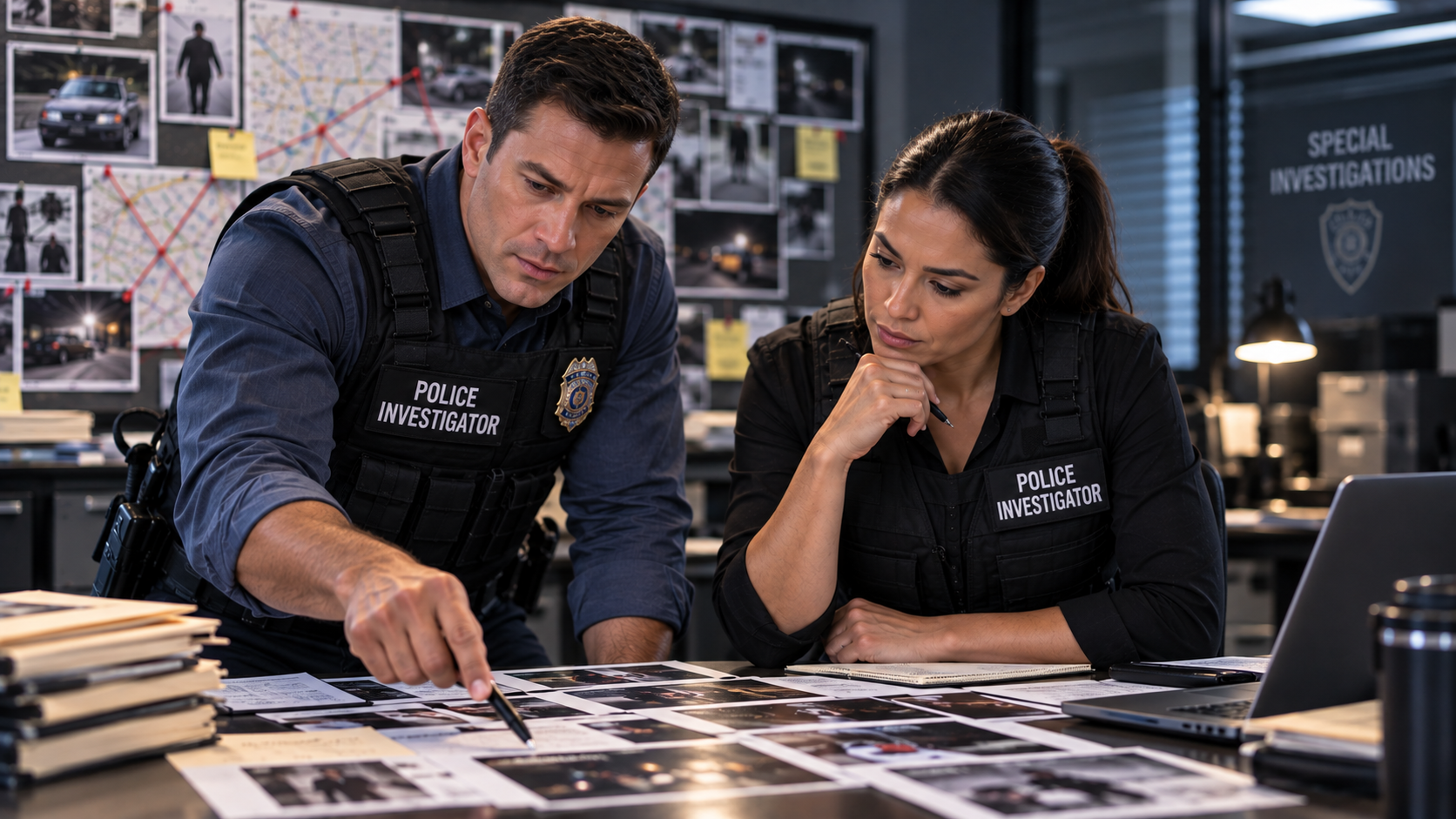
A witness remembers a vehicle. A camera captures part of a license plate. A report mentions a similar method. A phone record establishes a timeline. Each fact may seem minor on its own. The investigator’s real value emerges when they connect those separate facts.
That is the difference between collecting information and producing intelligence.
Facts Are Not the Same as Understanding
Modern investigators have access to more information than ever: body-camera footage, dispatch records, surveillance video, digital evidence, social media, license-plate-reader data, witness statements, and prior reports.
But having more information does not automatically produce a clearer case.
In fact, more information can create a new problem: cognitive overload. When investigators must review large amounts of fragmented material, important relationships can remain hidden. A name may appear in several reports. A vehicle description may change slightly. Two incidents may share the same unusual behavior, location, or time pattern.
The missing connection is often buried between documents, not inside a single document.
Sponsored | Klyvorek

The Best Investigators Search for Relationships
Strong investigators continually ask:
- What does this fact connect to?
- Where else has this name, vehicle, address, or method appeared?
- Which fact does not fit the current explanation?
- What should be present but is missing?
- Could these separate incidents involve the same person or pattern?
These questions move an investigation beyond documentation and toward analysis.
They also help prevent tunnel vision. Investigators should not connect facts merely to confirm their first theory. They must actively search for evidence that challenges it.
AI Can Assist, but It Cannot Own the Conclusion
Artificial intelligence can help organize timelines, compare reports, identify repeated details, and flag possible inconsistencies. It can reduce the mental burden of sorting through large amounts of information.
However, AI should identify possible connections, not declare them true.
The investigator must verify the source, assess the context, consider alternative explanations, and document their conclusion. A repeated name may be meaningful, or it may be coincidence. Similar conduct may reveal a pattern, or it may reflect a common method used by unrelated offenders.
The final judgment must remain human, explainable, and evidence-based.
The Real Investigative Advantage
The best investigator is not always the person who gathers the most facts.
It is the person who recognizes which facts belong together, notices what everyone else overlooked, and tests the connection before acting on it.
The next time an investigation stalls, do not immediately search for more information.
First, place the known facts side by side, and ask what should connect them.
–American Academy of Advanced Thinking & OpenAI