For decades, Hollywood has made police work fascinating.
CSI made forensic investigations aspirational. Police dramas introduced millions of viewers to detectives, evidence collection, criminal profiling, and the intellectual challenge of solving crimes.
Yet many police departments still recruit as though applicants are primarily looking for a traditional government job.
What if departments stopped simply advertising police careers and let prospective applicants experience them?
The Recruitment Problem
Law enforcement faces a difficult recruiting environment. Agencies compete for candidates while managing retirements, resignations, changing career expectations, and public perceptions of policing.
But recruitment is not simply about attracting more applicants.
It is about generating meaningful interest among people who may never have seriously considered a law enforcement career.
Hollywood has demonstrated something important: investigative work can capture attention.
The opportunity is to transform that attention into informed career exploration.
From Watching Police Work to Experiencing It
Imagine visiting a police department’s recruitment website and encountering an interactive mystery.
A fictional burglary has occurred.
You review the crime scene, interview virtual witnesses, examine evidence, and decide what information matters.
Artificial intelligence adds realistic dialogue, unexpected developments, and questions that require critical thinking.
You complete the experience by preparing a brief investigative narrative.
Then the department reveals how those activities relate to actual police responsibilities.
Suddenly, recruitment becomes participation rather than persuasion.
This approach draws on gamification research. Sailer and Homner (2020) found positive effects of gamification on cognitive, behavioral, and motivational learning outcomes, although effects varied across studies.
The implication is promising, but not automatic: engaging experiences must also teach something meaningful.
Hollywood Creates Curiosity. Departments Must Create Credibility.
The goal should not be recreating television’s unrealistic timelines, technological capabilities, or dramatic confrontations.
Instead, agencies could borrow cinematic storytelling while presenting authentic professional expectations.
Participants should encounter ethical decisions, incomplete evidence, report-writing responsibilities, community interactions, and situations where restraint matters more than excitement.
A recruitment experience could conclude with career pathways, eligibility requirements, academy expectations, and an invitation to speak with a recruiter.
The Real Opportunity
Police departments already spend money trying to attract attention.
What if they invested in experiences that allow potential applicants to discover whether the profession interests them?
An interactive recruitment experience could be available continuously, reach prospective applicants beyond traditional career fairs, and introduce policing to students and career changers.
Hollywood made people curious about police work.
The next generation of police recruitment could let them experience the responsibility that comes with it.
And that may be a more compelling invitation than another recruitment poster.
–Klyvorek & OpenAI
KLYVOREK helps law enforcement professionals strengthen report-writing skills through realistic fictional scenarios, self-paced practice, and AI assistance. The officer provides the facts. KLYVOREK builds the draft. The officer reviews, refines, and improves it.
_____________________________________
References
Police Executive Research Forum. (2026, May 23). PERF national survey shows police staffing rebounds to its 2022 level as agencies employ new hiring strategies. https://www.policeforum.org/trending23may26.
Sailer, M., & Homner, L. (2020). The gamification of learning: A meta-analysis. Educational Psychology Review, 32, 77–112. https://doi.org/10.1007/s10648-019-09498-w.
The CSI effect in academia: Influencing forensic science enrolment and perception in higher education. (2025). Egyptian Journal of Forensic Sciences. https://doi.org/10.1186/s41935-025-00467-9.
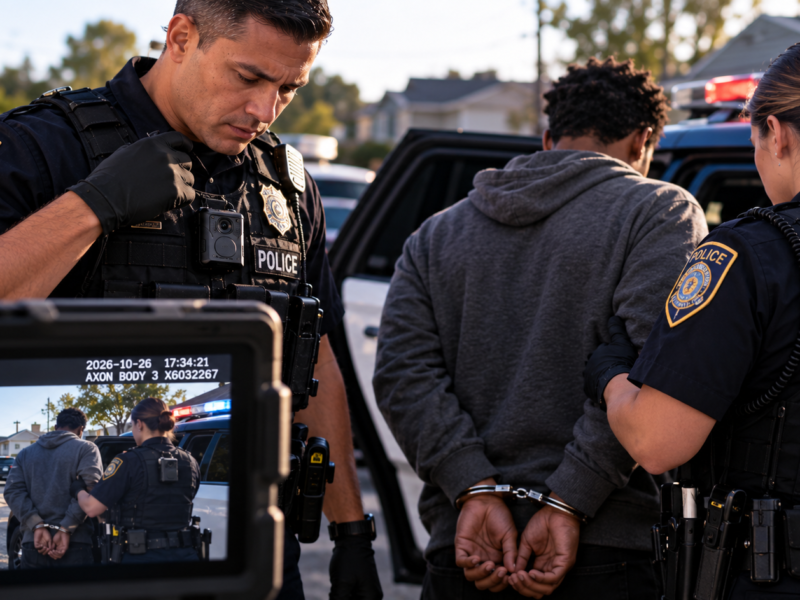
Image disclaimer: This image was generated using OpenAI’s ChatGPT for illustrative purposes. The depicted individuals and recruitment event are fictional and do not represent actual police department recruitment activities.