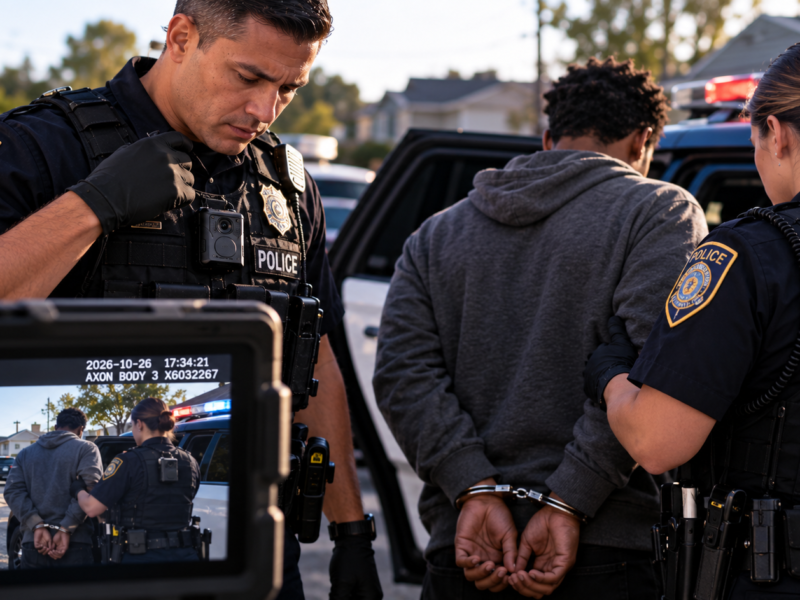
Artificial Intelligence (AI) is fundamentally transforming public safety education from static, reactive instruction into dynamic, adaptive learning environments. Modern police academies and in-service training programs are rapidly integrating machine learning (ML), natural language processing (NLP), and extended reality (XR) to prepare officers for complex operational challenges. As societal expectations for accountability and de-escalation rise, AI-driven platforms have shifted from a technological novelty to a core strategic necessity for public safety organizations.
Why Modern Law Enforcement Needs AI Training
Traditional law enforcement training faces systemic constraints: limited instructor availability, high costs associated with live role-players, and rigid, pre-recorded simulation branching. Modern AI solutions bypass these barriers by offering scalable, deliberate repetition without compromising instructional integrity.
Beyond efficiency, these tools mitigate organizational liability. By exposing officers to high-repetition, stress-inducing scenarios in controlled settings, agencies build stronger decision-making under pressure. AI analytics also generate objective performance measurements by tracking biometric indicators, speech patterns, and policy alignment, replacing subjective evaluation with data-backed feedback loops that protect agencies and communities.
The Emerging Technology Ecosystem and Future Outlook
The future of public safety relies on a unified technological matrix combining physical, verbal, and documentation training.
1. Physical & Tactical XR Simulators
Simulators such as Apex Officer and Street Smarts VR use biometric sensors to measure heart rate variability, eye dwell time, and weapon handling under simulated distress.
- The Future: Tactical training will merge with predictive analytics to create hyper-personalized adaptive scenarios. AI systems will dynamically adjust scenario difficulty based on an officer’s real-time physiological stress metrics, ensuring optimal stress inoculation.
2. Conversational De-Escalation Engines
Platforms like Axon VR and MILO Live Character Builder use generative NLP to power non-player characters (NPCs) that respond dynamically to an officer’s voice, pitch, and word choice.
- The Future: Dialogue models will incorporate hyper-local cultural nuances, specialized behavioral health profiles, and multi-agent dynamics. Recruits will routinely navigate complex mental health crisis scenarios where subtle changes in active listening yield realistic, divergent outcomes.
3. Documentation & Articulation Platforms
While XR handles physical and verbal engagement, operational readiness remains incomplete without lawful articulation. As part of the public safety documentation layer, platforms like Klyvorek address this critical requirement. Klyvorek is a self-paced, scenario-based documentation training platform where officers practice turning field facts into clear incident narratives, search warrants, and arrest warrant drafts.
By pairing fictionalized exercise patterns with AI-assisted coaching, Klyvorek reinforces core writing mechanics, such as chronological clarity, attribution, and probable cause structuring, while enforcing strict human oversight.
- The Future: Documentation training will continuously interface with physical simulators. Officers will move directly from completing a VR crisis scenario to drafting the accompanying incident report in platforms like Klyvorek, evaluating both their tactical choices and legal justification in a unified pipeline.
The convergence of adaptive XR role-playing and dedicated articulation tools creates a comprehensive framework for modern public safety. By equipping officers with dynamic verbal practice, biometric feedback, and rigorous documentation habits, AI-driven platforms ensure law enforcement personnel have both split-second judgment and the legal precision modern policing requires.
–Edward S. Brown, M.S. and Google Gemini
___________________________________
References
Axon Enterprise. (2024). Virtual reality training for modern public safety. Axon Ecosystem Reports.
FAAC Incorporated. (2025). MILO cognitive simulator and AI character integration. MILO Range Solutions.
Klyvorek. (2026). Self-paced police documentation training platform. Klyvorek Institute. https://www.klyvorek.com.
Image generated by OpenAI