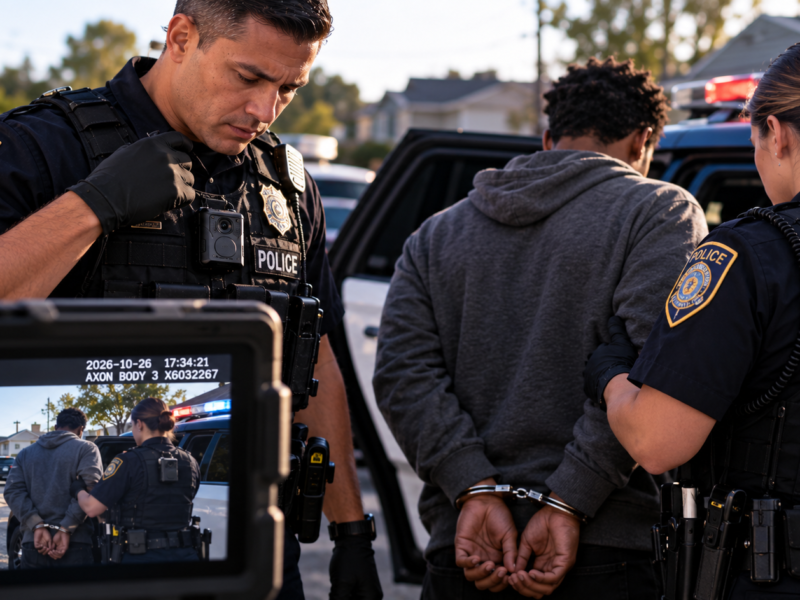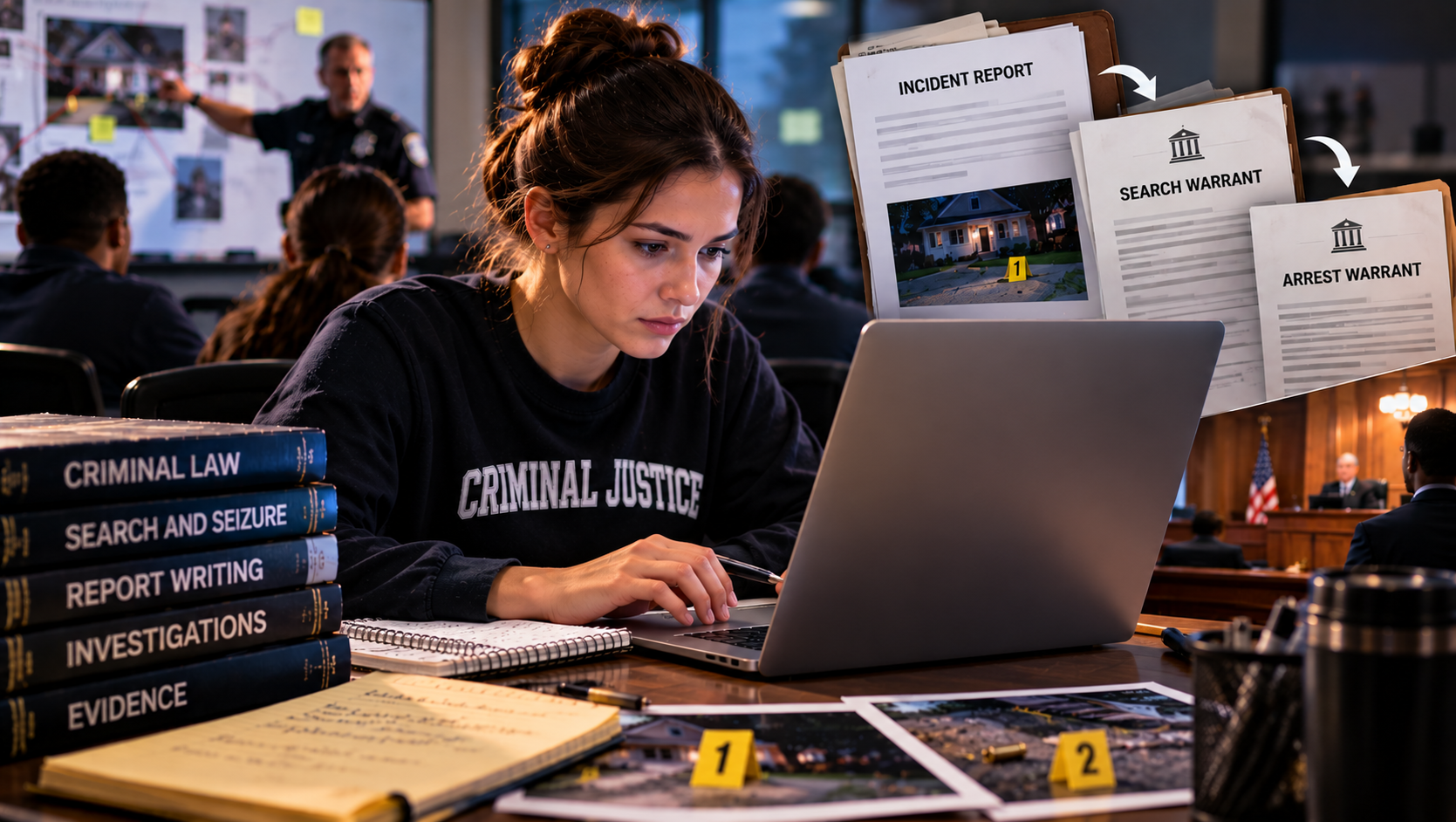
In law enforcement, criminal justice education, and investigative work, the first time someone has to make a difficult decision should not be the first time they have thought through that kind of problem.
That is the idea behind the KLYVOREK Institute.
Scenario-based training gives learners space to work through realistic situations, evaluate facts, make decisions, explain their reasoning, and document what they believe the evidence supports.
The value isn’t in pretending a fictional exercise can reproduce every pressure of the real world. It can’t.
The value is in creating repeated opportunities to think before the consequences are real.
Research across professional training environments supports the broader principle. Deliberate practice, structured activity designed specifically to improve performance, has been associated with better performance, although its effects vary by domain and should not be overstated (Macnamara et al., 2014).
Simulation research also suggests that practice becomes more useful when learners receive feedback and can repeat or refine their performance. In medical education, simulation combined with deliberate practice has outperformed traditional clinical education for specific skill-acquisition goals (McGaghie et al., 2011).
The same principle has relevance to policing. Research involving police academy training has found benefits from structured practice, scenario-based feedback, and repeated performance opportunities, including effects that persisted after graduation (O’Neill et al., 2019).
That matters because professional judgment isn’t a single skill.
It is a chain:
- What did you observe?
- What were you told?
- What remains unknown?
- What evidence matters?
- What does the law permit?
- What action is justified?
- And can you clearly explain why?
The KLYVOREK Institute is designed to make that chain visible.
Learners step into fictional scenarios, develop facts, make decisions, and document their reasoning. Officers can sharpen articulation. Criminal justice students can move beyond theory. Investigators can revisit foundational judgment. Even serious mystery enthusiasts can test whether their conclusions actually hold up against the facts.
The goal is not to replace instructors, academy training, agency policy, or professional experience.
It is simpler than that.
Provide another place to practice.
Because when the real call comes, there is no rewind button.
At the KLYVOREK Institute:
Make Your Case. Practice Before It’s Real @ KlyvorekInstitute.com.
_____________________________________
References
Macnamara, B. N., Hambrick, D. Z., & Oswald, F. L. (2014). Deliberate practice and performance in music, games, sports, education, and professions: A meta-analysis. Psychological Science, 25(8), 1608–1618.
McGaghie, W. C., Issenberg, S. B., Cohen, E. R., Barsuk, J. H., & Wayne, D. B. (2011). Does simulation-based medical education with deliberate practice yield better results than traditional clinical education? Academic Medicine, 86(6), 706–711.
O’Neill, J., O’Neill, D. A., Weed, K., Hartman, M. E., Spence, W., & Lewinski, W. J. (2019). Police academy training, performance, and learning. Behavior Analysis in Practice, 12, 353–372.