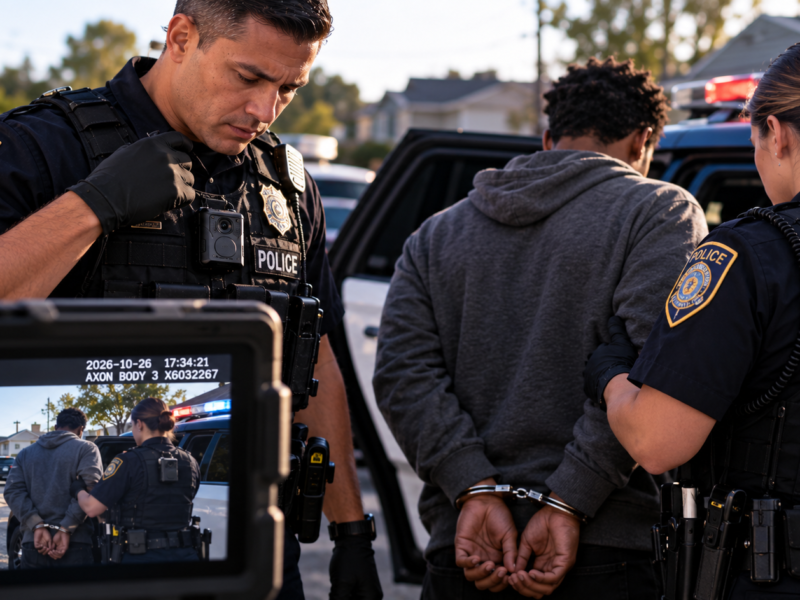
For generations, the police academy has been a place.
A recruit leaves home, reports to a centralized training facility, completes a structured curriculum, and then moves into field training.
That model still makes sense.
But it may no longer need to be the only model.
Victoria Police recently announced that its first regional academy will open in Mildura in January 2027. Recruits will complete the same 25-week program, assessments, and standards used at the primary academy, but train closer to their families and communities. More than 200 people applied for the first regional intake (Victoria Police, 2026a).
That raises an interesting recruitment question:
What if some good candidates are not rejecting policing? What if they are rejecting the disruption required to reach the academy?
Now combine that idea with another change already occurring in police training.
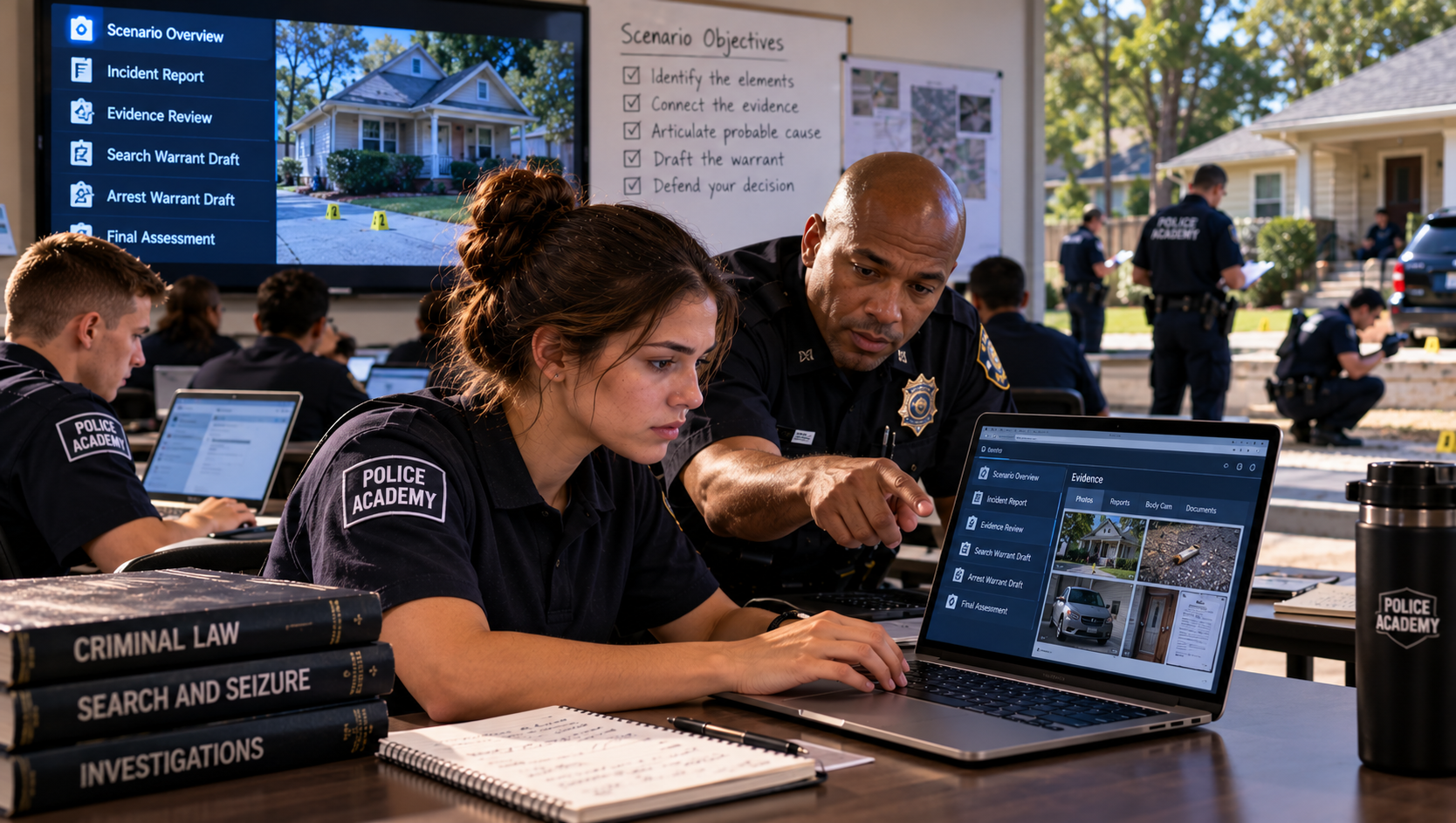
Scenario-based instruction increasingly allows recruits to practice decision-making in realistic environments rather than simply discussing situations in classrooms. Michigan’s law enforcement training standards describe reality-based scenarios as an important method for developing critical thinking, multitasking, problem-solving, judgment, and the ability to articulate decisions afterward (Michigan Commission on Law Enforcement Standards [MCOLES], 2025).
Artificial intelligence could add another practical layer.
Halton Regional Police Service recently introduced AI-powered simulations for 911 communicators that provide realistic scenarios, immediate scoring, and feedback intended to identify strengths and performance gaps (Halton Regional Police Service [HRPS], 2026).
Imagine applying the broader concept to police recruits.
A recruit studies law and procedure with an instructor.
Then the recruit encounters a realistic fictional call: a domestic disturbance, suspicious vehicle, burglary, theft, or traffic stop.
They must determine what happened, identify missing information, explain their decisions, and document the incident.
AI could vary facts, generate additional scenarios, and help instructors identify recurring weaknesses.
But the instructor remains central, along with traditional academics, firearms training, defensive tactics, ethics, field training, supervision, and human evaluation.
The innovation isn’t eliminating the police academy; it is unbundling the idea that every part of the academy must happen in one building.
Regional training could move instruction closer to recruits.
Scenario technology could move practice closer to reality.
And AI could make repetition and individualized feedback more practical.
The conventional wisdom still applies: recruits need standards, discipline, instructors, peer interaction, and real-world mentoring.
But perhaps the next police academy should be thought of less as a building, and more as a training system that follows recruits from classroom knowledge to practical competence.
–Klyvorek & OpenAI
KLYVOREK helps law enforcement professionals strengthen report-writing and documentation skills through realistic fictional scenarios, self-paced practice, and AI assistance. The officer provides the facts. KLYVOREK builds the draft. The officer reviews, refines, and improves it.
_______________________________________
References
Halton Regional Police Service. (2026, October 8). Harnessing AI to enhance public safety: HRPS first in Canada to deploy innovative 911 training and recruitment technology.
Michigan Commission on Law Enforcement Standards. (2025). Policies and procedures manual: Basic police training schools.
Victoria Police. (2026a, October 22). SuniTAFE to host Victoria Police’s first regional academy.
Victoria Police. (2026b). Regional police academy program.