The transition from academic criminal justice programs to field training presents a consistent operational challenge: new recruits struggle to produce court-ready police documentation. While higher education excels at teaching constitutional law, criminology, and procedural mechanics, Field Training Officers (FTOs) often encounter rookies who write narratives like term papers instead of objective, legally defensible investigative records.
The Gap Between Academia and the Patrol Car
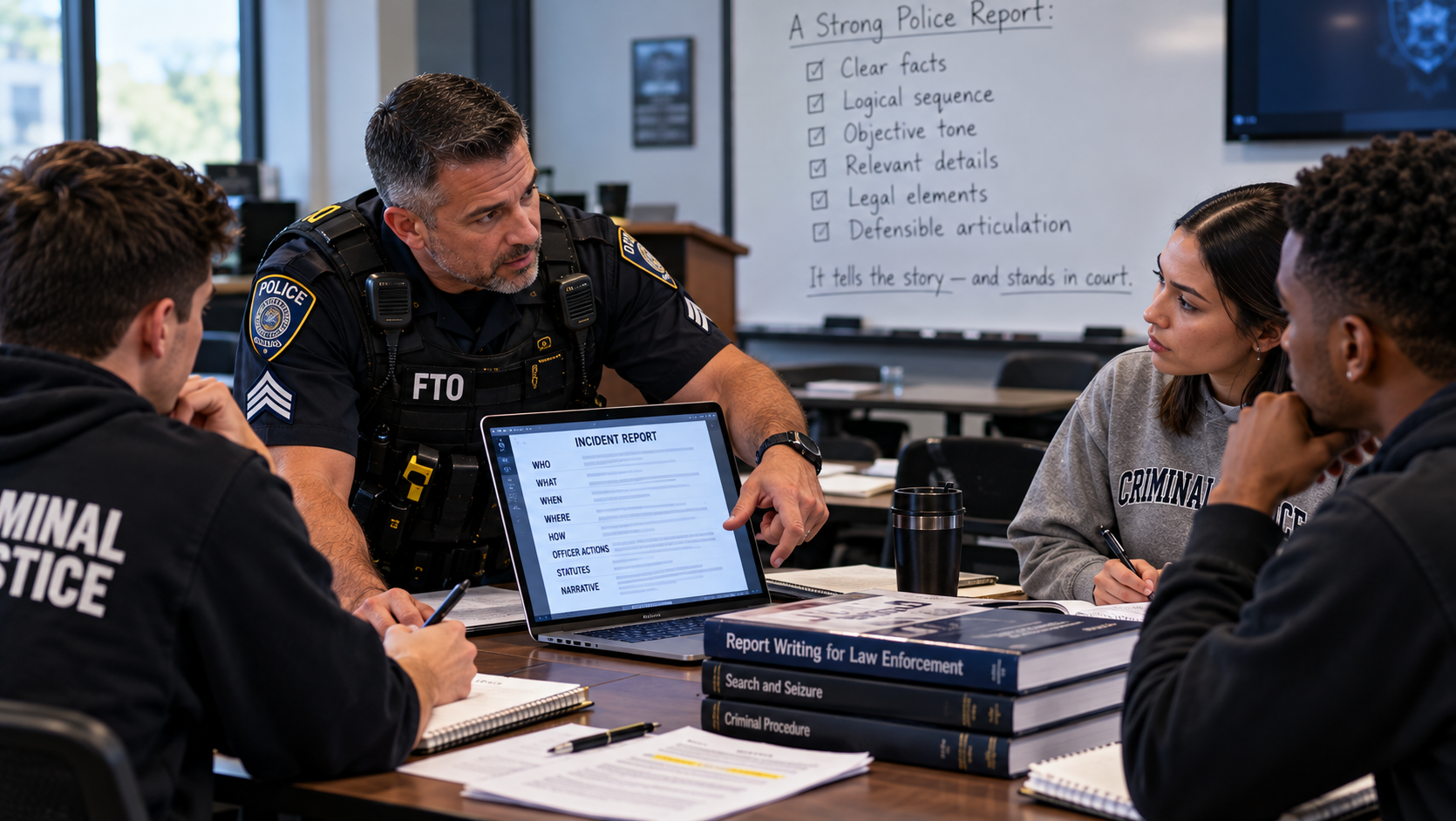
In traditional criminal justice curricula, students learn to synthesize complex theories, draw broader conclusions, and utilize expressive vocabulary. However, modern patrol documentation demands the opposite. When recruits arrive at their first duty assignment, FTOs spend countless hours remediating three critical report-writing deficiencies:
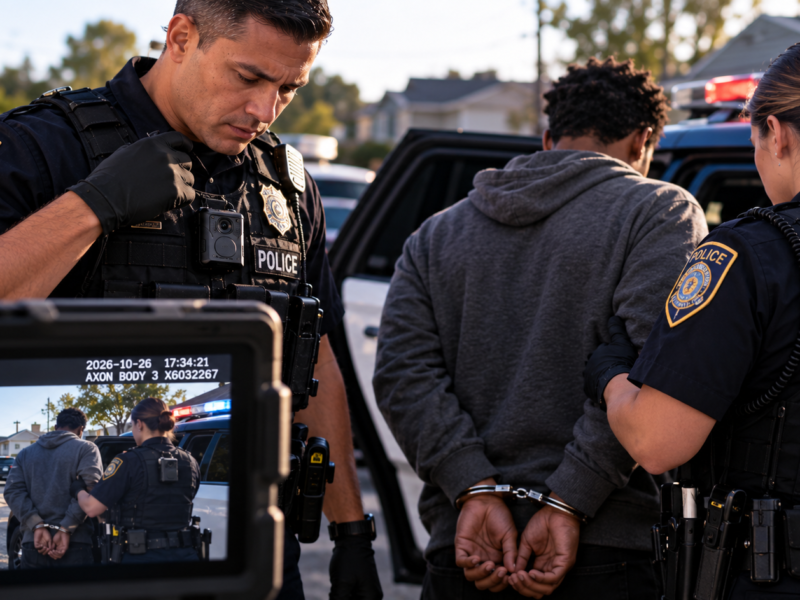
- Subjective Characterization vs. Objective Articulation: Recruits often use conclusory language, writing statements like “the subject acted aggressively.” In court, opposing counsel easily attacks subjective impressions. FTOs require recruits to state specific, observable facts: the subject clenched both fists, assumed a fighting stance, and raised his voice to high decibels.
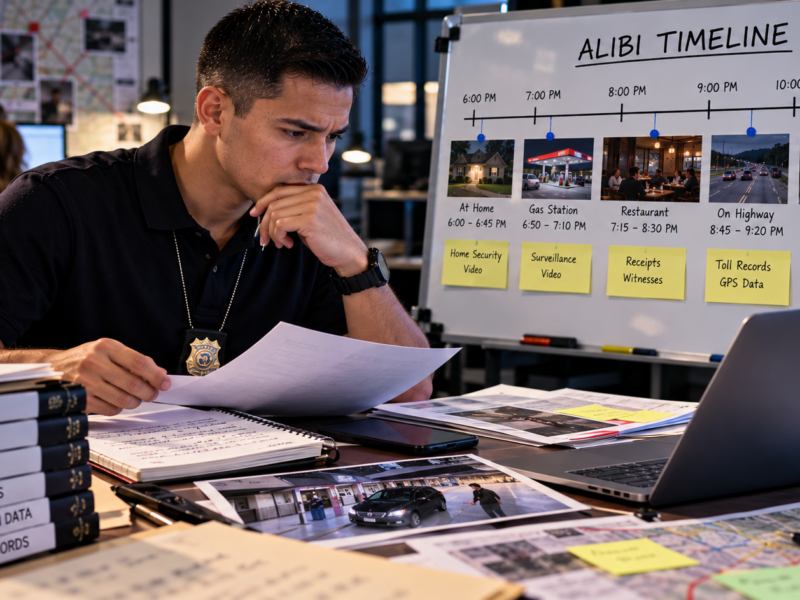
- Chronological Clarity: Academic papers allow for thematic structuring, but police narratives require strict chronological order to establish a clear timeline for prosecutors, defense attorneys, and juries years after the incident.
- Establishing Offense Elements: An incident report is not merely a summary; it is an evidentiary document. Recruits often describe the general narrative but fail to document every legal element required for the specific charge.
Mitigating Operational and Legal Risk
Poor documentation directly impacts agency operations and criminal prosecutions. Incomplete narratives, ambiguous statements, or missing probable cause details lead to rejected charges, successful defense motions to suppress, and compromised courtroom credibility. Furthermore, when FTOs must repeatedly return drafted reports for revision, field training timelines lengthen, administrative backlogs grow, and operational costs increase.
Bridging this gap requires integrating scenario-based documentation practice directly into criminal justice coursework. When students practice translating active scenarios into structured narratives before entering the academy, they build practical muscle memory.
Recommendations for Educators
To better align academic instruction with field expectations, criminal justice faculty should:
- Incorporate Real-World Templates: Replace traditional essay formats with standard incident report structures.
- Emphasize Articulation Over Vocabulary: Shift grading criteria from passive prose to precise, observable factual statements.
- Utilize Interactive Simulations: Integrate scenario-driven training tools that force students to extract critical facts and draft narratives under realistic constraints.
By shifting documentation training from passive academic analysis to practical, scenario-driven articulation, higher education can graduate recruits who are not just knowledgeable about the law, but fully prepared to document it.
–Klyvorek & Google Gemini
KLYVOREK helps law enforcement professionals strengthen report-writing and documentation skills through realistic fictional scenarios, self-paced practice, and AI assistance. The officer provides the facts. KLYVOREK builds the draft. The officer reviews, refines, and improves it.